London, British Library MS Egerton 159
Deborah Hayden
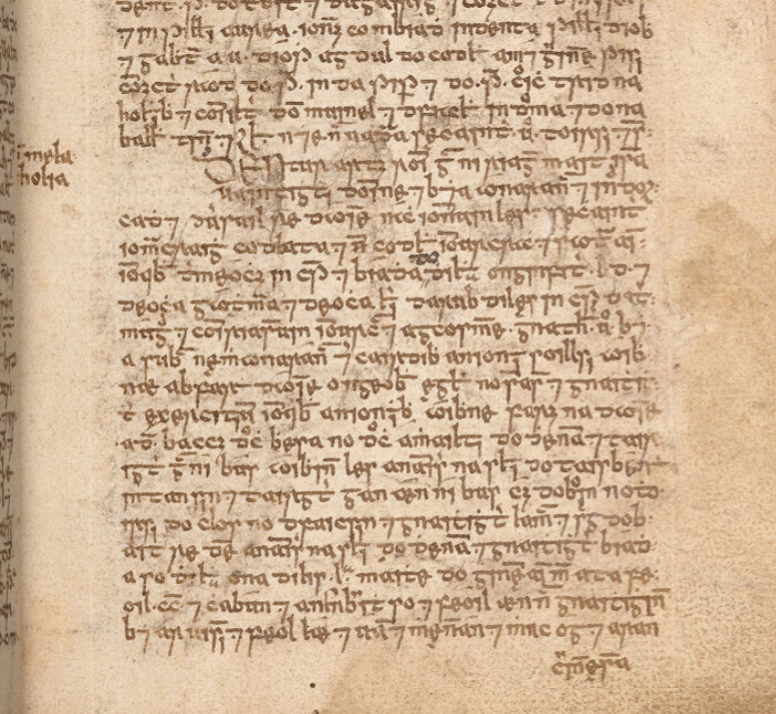
Figure 1: London, British Library MS Egerton 159, fol. 10r: the beginning of a chapter on treatments for melancholia (‘melancholy’)
This paper manuscript of 23 folios, which was recently digitised by the British Library for the LEIGHEAS project, was written near the end of the sixteenth century. Its cataloguer, Standish Hayes O’Grady (1926: 280), noted that the texts were well written in several hands and that ‘The language is altogether modern; orthography good, but with occasional reproduction of local pronunciation.’ The main scribe was Tadhg Mac Caisín, who wrote a note on fol. 2v observing that he had finished writing some definitions drawn from Bernard of Gordon’s Lilium medicinae while in Thomastown (a mbaile Tumáis) on the 28th of July 1592. O’Grady suggested that the location in question may have been Thomastown, Co. Kilkenny. Tadhg Mac Caisín belonged to a hereditary medical family that is known to have been practising since at least the early fifteenth century and had apparently been unsuccessful in contesting the post of official physician to the Mac Giolla Phádraig dynasty in Ossory a century later (Nic Dhonnchadha 2006: 13 and 35–6). Another Irish medical manuscript (Dublin, National Library of Ireland MS G 453) was written for Tadhg in the same year as Egerton 159 (Ní Shéaghdha 1987: 38). One of the anonymous scribes who contributed to Egerton 159 may have been Tadhg’s student, as he wrote on fol. 7r that he had completed the preceding text for him on the 30th of January 1592, and that his father William had dictated it to him (O’Grady 1926: 282).
Egerton 159 contains a miscellany of medical texts, including numerous medical definitions in Latin followed by Irish translations; a copy of the work known as the Capsula eburnea or ‘Ivory Casket’, containing advice about the signs of approaching death; a note on temperaments as derived from birth during different lunar phases; and a tract on regimen to be followed and treatments to be applied for various conditions, including paralysis, melancholy, dropsy, arthritis, menstruation and eye problems.
Further Reading:
- Ní Shéaghdha, Nessa (1987), Catalogue of Irish Manuscripts in the National Library of Ireland, Fasciculus X: MSS. G 434–G 500 (Dublin: DIAS), pp. 33–9
- Nic Dhonnchadha, Aoibheann (2006), ‘The Medical School of Aghmacart, Queen’s County’, Ossory, Laois & Leinster 2: 11–43
- O’Grady, Standish Hayes (1926), Catalogue of Irish Manuscripts in the British Library [formerly British Museum], Volume 1 (London: British Museum; repr. Dublin: DIAS, 1992), pp. 280–5