Dublin, Royal Irish Academy MS 23 O 6 (464)
Siobhán Barrett
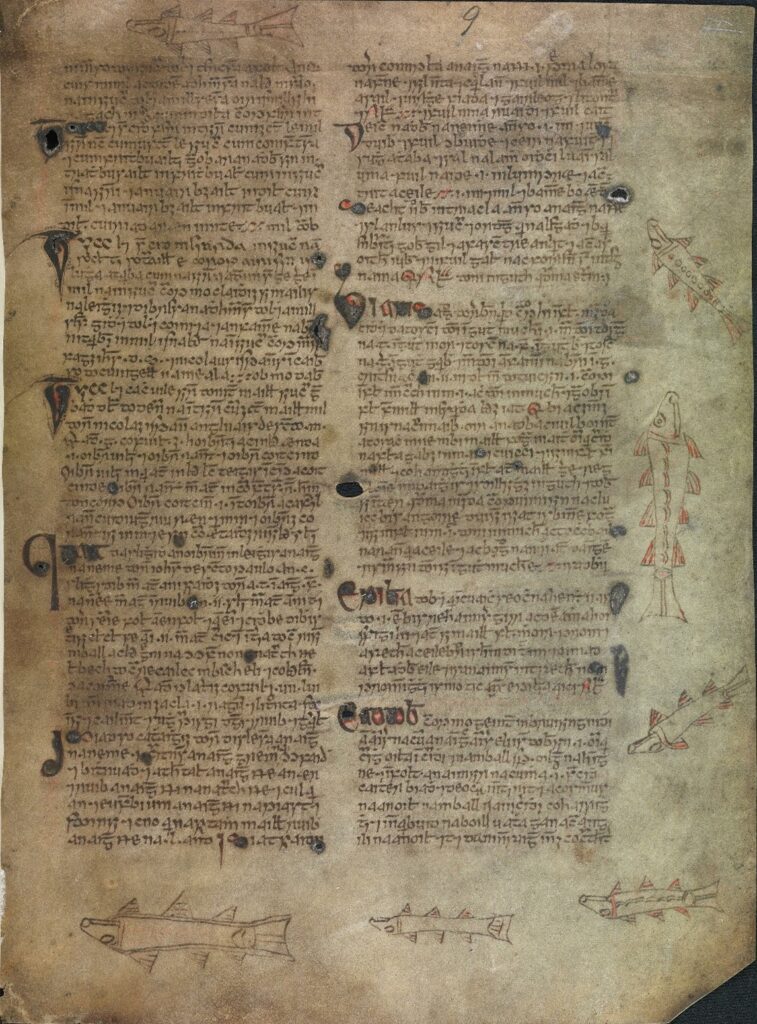
Figure 1: Dublin, Royal Irish Academy MS 23 O 6, p. 9: marginal drawings of fish surrounding short texts describing ingredients for poisons and their antidotes. Image courtesy of Irish Script on Screen.
The RIA catalogue dates this manuscript to around 1400. It consists of four separate and originally disconnected manuscripts that have been bound together. There are at least three different hands and no scribal signature, but Ní Shéaghdha (1967: 68 and 84) believed that the first section, pp. 3–18, is in the hand of Donnchadh Ó Bolgaidi, who was the main scribe of NLI MS G11 (see our Manuscript of the Month for January 2024). These pages may have originally been included in G11, allowing us to date this first fragment of the manuscript to the mid-1400s. This part of the manuscript contains a text on uroscopy, the diagnosis of disease by the visual examination of urine. Seven fish have been drawn in the margins of p. 9 (see Figure 1), which contains some short paragraphs on poison. Included in a list of poisonous ingredients on this page is ‘the blood of the lamprey’, explaining perhaps the presence of the fish decorating this page. The serum and mucus of some species of lamprey are poisonous and need to be handled carefully before eating to avoid poisoning. These images of fish with paired fins do not resemble lampreys, however, which are characterised by long, cylindrical bodies and one or two dorsal fins.
The second part of the codex contains a fragmentary copy Tadhg Ó Cuinn’s Materia Medica beginning with Sambuccus and ending with the first few lines of the chapter on Ydor. The third contains an alphabetical list of plant names in Irish without equivalent Latin names and an article, Uirtuiteis aque vite, extolling the virtues of whiskey, such as its usefulness as a preservative; its ability to draw the healing power from plants and spices; and its power to cure abscesses, clear the sight, sharpen the intellect and preserve youth in every person (Ó Conchubhair 1990). The final fragment of four pages contains remedies, perhaps an extract from a longer treatise.